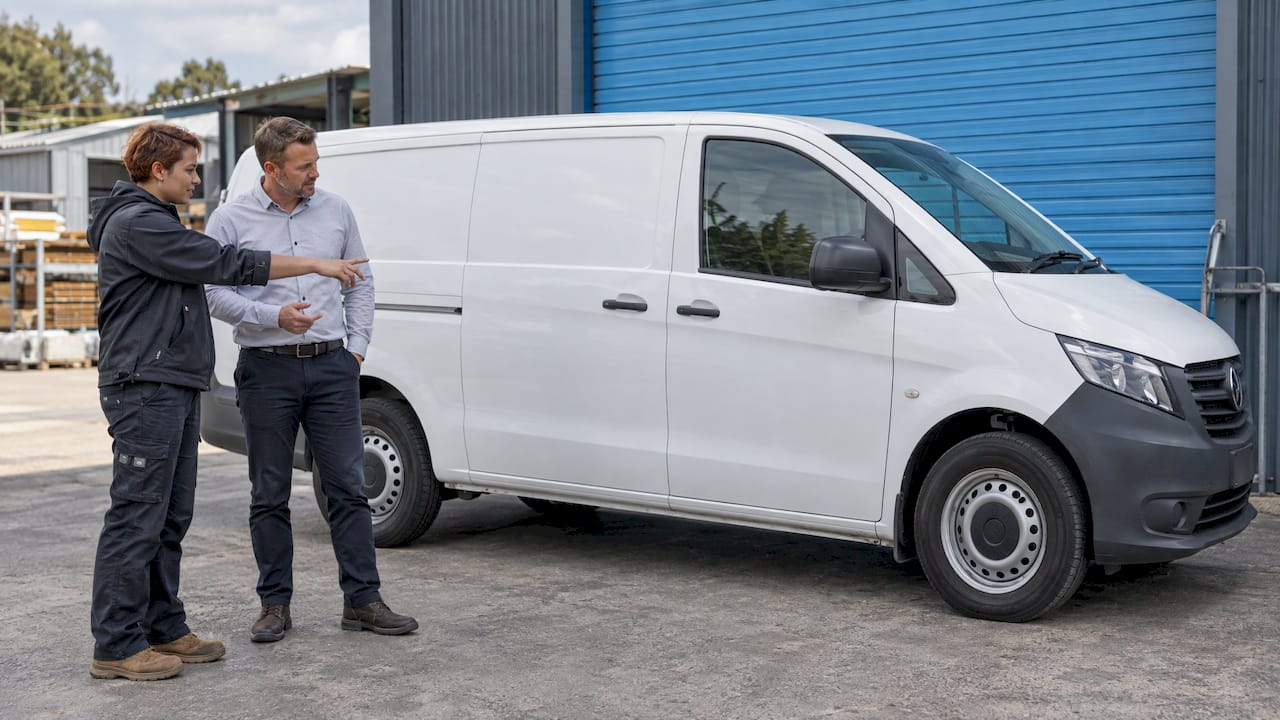
Commercial vehicle finance is a loan or lease that lets your business buy or use a work vehicle, such as a ute, van, truck or trailer, and pay for it over a set term instead of upfront. The structure you pick (chattel mortgage, hire purchase, lease or a secured loan) changes your repayments, your tax treatment and what you own at the end. The lenders you apply to change the rates, fees and conditions, and those are set by each lender based on your situation. A real broker at AFH Finance compares a panel of 40+ lenders for employed Australians and ABN holders, Australia wide. No cost to check your options. Soft enquiry, no credit score impact.
See your options from our panel of 40+ lenders
Soft enquiry, no credit score impact. No cost to check your options.
Compare my optionsThis guide is general information only, not personal advice. It explains the options in plain words so you can have a better conversation with a broker about your own situation.
AFH Finance
Compare finance for your work vehicle
AFH Finance helps ABN holders compare vehicle finance options from a panel of 40+ lenders, with a broker to confirm what may suit.
TL;DR
- Commercial vehicle finance covers utes, vans, light and heavy trucks, trailers and other work vehicles bought new, used or through a private sale.
- The main structures are chattel mortgage, hire purchase, finance lease and operating lease. Each treats ownership, GST and tax differently, so ask your accountant how it applies to you.
- Lenders usually look at your ABN, how long you have traded, your credit information and the vehicle itself. Rates are set by the lender based on your situation.
- A broker can compare lenders for you. AFH is paid by lenders and a broker fee may be added to the loan, always explained in writing before anything proceeds.
Table of Contents
- What commercial vehicle finance is
- The main types of commercial vehicle finance
- Who can apply, and what lenders look at
- Deposit, term, fees and balloons: what changes the total cost
- Tax, GST and depreciation: the points to raise with your accountant
- How to apply for a commercial vehicle loan
- Why use a broker for commercial vehicle finance
- Commercial vehicle finance with AFH
- Our view on commercial vehicle finance
- FAQ
- Sources
What commercial vehicle finance is
A commercial vehicle loan lets a business, sole trader or ABN holder fund a vehicle used mainly to earn income. The lender pays for the vehicle, you repay it in instalments over an agreed term, and the vehicle usually acts as security for the loan. Because the vehicle is the security, this is often called secured finance or asset finance. We explain the wider category in our guide to business asset finance in Australia.
The term “commercial” describes how the vehicle is used, not only what it is. A ute used for a trade, a van used for deliveries and a prime mover used for freight all qualify as work vehicles. A car used mainly for business can also be financed this way.
Vehicles you can fund
Lenders on our panel can consider a wide range of work vehicles. Common examples include:
- Utes and light commercial vehicles for trades and contractors
- Vans for deliveries, mobile services and couriers
- SUVs and passenger cars used for business
- Light and heavy trucks
- Trailers and tipper bodies
- Buses and other people movers
- Electric vehicles used for work
Vehicles can be new, demo or used, and bought from a dealer or from a private seller. If you are weighing a used vehicle, our used car finance guide covers how the process works. Machinery and attachments are a separate category, covered in our machinery finance guide.
The main types of commercial vehicle finance
The name on the contract matters more than most people expect. It decides who owns the vehicle, how GST is handled and how the end of the term works. Here is a plain comparison.
| Structure | Who owns the vehicle | How it generally works | Often suits |
|---|---|---|---|
| Chattel mortgage | You own it from the start, the lender holds a mortgage over it | You borrow to buy the vehicle, repay in instalments, and may leave a final balloon payment | Businesses that want to own the vehicle |
| Hire purchase | The lender owns it until the final payment | You make regular payments and take ownership at the end | Businesses that want to own it at the end of a set term |
| Finance lease | The lender owns it | You pay to use the vehicle, with an agreed residual at the end | Businesses that want use of a vehicle without owning it |
| Operating lease | The lender owns it | You rent the vehicle for a term and hand it back | Businesses that replace vehicles regularly |
| Secured business or personal loan | You own it, the vehicle is security | A loan for a set amount over a set term | Buyers who want a straightforward loan |
Structures and terms vary by lender, and not every lender offers every structure. A broker can explain which structures are on offer from the lenders that may suit you.
Chattel mortgage
This is the structure many ABN holders ask about first. You take ownership of the vehicle when you buy it, and the lender registers a security interest over it until the loan is repaid. Many chattel mortgages allow a balloon, which is a lump sum left owing at the end of the term. A balloon lowers the regular repayment, but it increases the total you pay over the loan, so it is worth seeing both figures side by side.
Hire purchase
With hire purchase, the lender owns the vehicle while you pay it off. Once the final payment is made, ownership passes to you. The tax treatment can differ from a chattel mortgage, which is one reason to speak with your accountant before choosing.
Leases
A finance lease and an operating lease both mean you use a vehicle that the lender owns. They suit businesses that prefer predictable payments and a defined end point, such as returning the vehicle or paying out a residual value. Rental payments under a lease are treated differently from loan repayments for tax and GST purposes.
Secured loans
If you want a simple loan rather than a specialist structure, a secured business or personal loan against the vehicle can work. Our business loans and equipment finance page sets out how this kind of finance is arranged through AFH.
Who can apply, and what lenders look at
Each lender sets its own criteria, so there is no single rule. In general, lenders look at the same handful of things when you apply for a commercial vehicle loan.
Your ABN and trading history
Many lenders ask for an active ABN, and some want to see that you have been trading for a set period. Newer businesses are often still able to apply, but the lenders that may suit you can be a smaller group. A broker knows which lenders on the panel work with newer ABNs and which prefer established businesses.
Your credit information
Lenders review your credit file as part of a full application. Checking your options with AFH is a soft enquiry, no credit score impact. A full application with a lender is a separate step, and your broker explains it before anything proceeds. You can read how credit scores and enquiries work on Moneysmart.
Documents lenders commonly ask for
The paperwork depends on the lender and the loan size, but you can usually expect to be asked for some of the following:
- Photo identification
- Your ABN and business details
- Recent bank statements
- Business activity statements or tax returns, for some lenders and loan sizes
- Details of the vehicle, such as a dealer invoice or private seller details
Some lenders offer lighter documentation options for established businesses. Others ask for more. Because requirements differ so much, gathering the documents with a broker beforehand means fewer surprises later.
Employed Australians
If you are employed full time or part time and buy a vehicle that you will use for work, a personal car loan can be the better fit than a business structure. Our car loans page covers new, used and private sale cars, utes and SUVs. If the vehicle will be used mainly in an ABN business, a business structure may be worth discussing instead. A broker can talk through which direction suits your situation.
Deposit, term, fees and balloons: what changes the total cost
There is no single deposit that applies to every commercial vehicle loan. Some lenders may fund the full purchase price for strong applications, while others expect a deposit. A larger deposit generally reduces the amount you borrow, which reduces the interest you pay over the term. We do not tell readers how much to borrow, because that depends on your cash flow, your business and your plans.
Four things move the total cost of any vehicle loan:
- The interest rate. Rates are set by the lender based on your situation, including the vehicle, your business and your credit information. Because they differ between lenders, comparing more than one is worthwhile.
- The term. A longer term usually means smaller repayments but more interest overall. A shorter term does the reverse.
- Fees. Lenders may charge establishment, account keeping or early repayment fees. Ask for every fee to be written down.
- The balloon. A balloon lowers regular repayments but leaves a lump sum due at the end, and interest is charged on that amount throughout the term.
When you compare offers, look at the comparison across the whole term, not only the monthly repayment. The government’s consumer site Moneysmart has guidance on car loans and the factors that affect their cost.
At AFH, any broker fee that may be added to the loan is explained in writing before you go ahead.
Tax, GST and depreciation: the points to raise with your accountant
Tax is one reason the choice of structure matters. We give general information only here, and your accountant is the right person to confirm how the rules apply to your business.
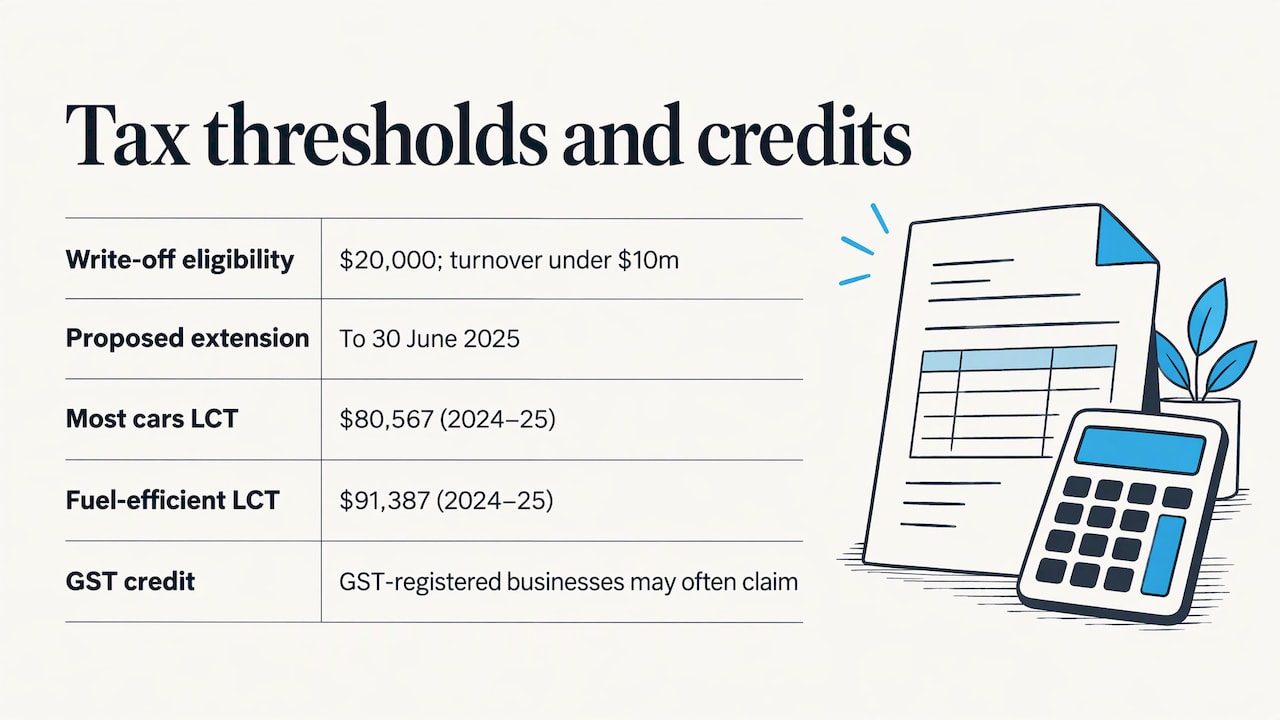
Asset write off. The federal government has repeatedly extended the small business asset write off, which lets eligible small businesses immediately deduct the cost of an eligible asset under a threshold. The Treasury bill that proposed extending the $20,000 write off for small business entities with aggregated turnover under $10 million to 30 June 2025 is an example of how these thresholds and dates change. Check the Australian Taxation Office (ATO) website for the threshold and dates that apply to the financial year you buy in.
Luxury car tax. The same explanatory material for that bill lists luxury car tax thresholds for the 2024 to 25 financial year of $80,567 for most cars and $91,387 for fuel efficient cars. It also proposed tightening the fuel efficient definition. Thresholds are indexed, so confirm the current figures with the ATO. Many work utes and vans are not passenger cars for these purposes, which is something your accountant can confirm.
GST. GST is charged on the purchase price of the vehicle. A business registered for GST can often claim a credit for the GST in the price, but how and when you claim depends on the structure and on your accounting method. Raise it with your accountant before you sign.
Depreciation, interest and running costs. Depending on the structure and how the vehicle is used, some of these may be deductible. Business use percentage matters, so keep a record of work use.
How to apply for a commercial vehicle loan
The steps are similar whether you are buying from a dealer or a private seller.
- Decide how the vehicle will be used. Work out whether it is mainly for business, mainly personal, or both. This affects which structure suits you.
- Choose the vehicle. You can start before you have chosen. Many buyers check options first so they know their position before they negotiate. Lenders usually need the vehicle details before they finalise a loan.
- Check your options. At AFH you start online with a short set of questions and see indicative repayments. Indicative figures are an estimate only. No cost to check your options. Soft enquiry, no credit score impact.
- Talk to a broker. A real broker calls you back to confirm the options that may suit your situation. This is where structure, term, balloon and fees are explained in writing.
- Gather your documents. Your broker tells you what the lenders you are considering will want, so you gather it once rather than several times.
- Submit the application. Your broker lodges it with the lender. The lender then assesses it and decides whether to offer finance.
- Settle and take the vehicle. For a dealer purchase, the lender pays the dealer. For a private sale, your broker can help with the paperwork for the seller, which differs from a dealer purchase.
Each lender runs its own process, so the steps can vary slightly.
Private sales and used vehicles
Buying a used work vehicle from a private seller is common among tradies and owner drivers. Some lenders fund private sales, and some limit the vehicle age or require checks that the vehicle is free of other debts. The Australian Securities and Investments Commission (ASIC) runs the Personal Property Securities Register search for checking whether a vehicle has a security interest registered against it. Your broker can explain the checks the lender will want.
Why use a broker for commercial vehicle finance
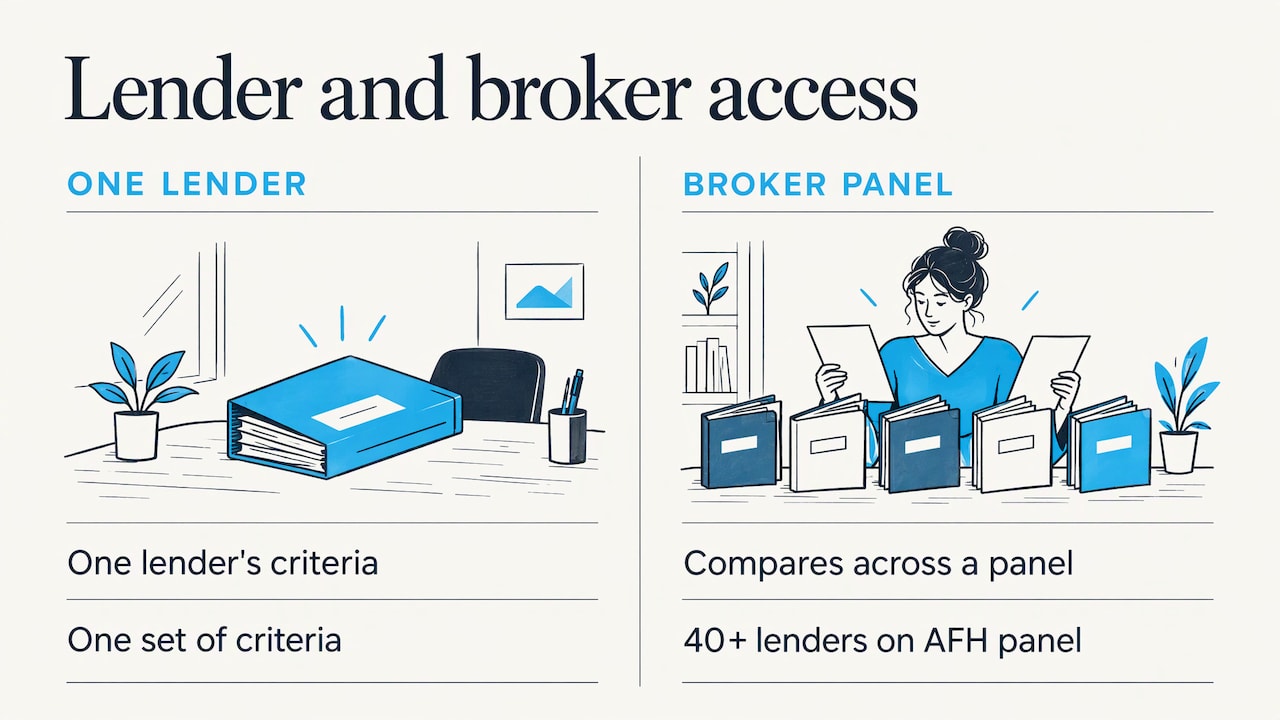
Going to one lender means seeing one set of criteria. A broker compares across a panel, which matters because lenders differ on vehicle type, age, ABN length, documentation and structure. AFH Finance is a broker, not a lender, and has a panel of 40+ lenders. We explain more about how this works in our guide to how an equipment finance broker works in Australia, and our guide to equipment business loans covers the related category of tools and equipment.
It also helps to know how a broker is paid. AFH is paid by lenders and a broker fee may be added to the loan. That fee is always explained in writing before anything proceeds. AFH Finance Pty Ltd is Credit Representative 548852 of Access Lending Group Pty Ltd, ACL 531308.
Commercial vehicle finance with AFH
If you are an ABN holder or an employed Australian buying a work vehicle, our business loans and equipment finance page is the place to start. You answer a short set of questions online, see indicative repayments, and a real broker calls you back to confirm the options that may suit your situation. No cost to check your options. Soft enquiry, no credit score impact.
If the vehicle is a car, ute or SUV bought mostly for personal use, our car loans page covers new, used and private sale purchases. If it is a caravan, see our caravan loans. We are rated 5.0 on Google from 57 reviews, with 750+ borrowers helped.
Our view on commercial vehicle finance
We talk to ABN holders and employed Australians about vehicle finance every day, and the pattern is consistent: people focus on the monthly repayment and leave the structure until last. We think it should be the other way around.
The structure decides who owns the vehicle, how GST is handled and what happens at the end of the term. Once that is clear, the lender choice and the repayment follow. That is why we start with a short set of questions and then have a real broker call you, not a call centre.
Lenders differ on vehicle type, vehicle age, trading history and paperwork. A panel of 40+ lenders means we can look across that range for options that may suit you, rather than fitting your business to one lender’s rules.
We keep the money side plain. We are paid by lenders, a broker fee may be added to the loan, and we explain it in writing before you go ahead. Rates are set by the lender based on your situation, and we never present an indicative figure as a final one.
AFH Finance
FAQ
What is the difference between a commercial vehicle loan and a normal car loan?
A commercial vehicle loan is arranged for a vehicle used mainly in a business, and it is often set up as a chattel mortgage, hire purchase or lease. A car loan is usually a personal loan for a vehicle you use privately. The tax and GST treatment can differ, so ask your accountant which fits your use.
Can a sole trader get commercial vehicle finance?
Yes, sole traders with an ABN can apply, and lenders will look at the ABN, trading history and credit information. Criteria differ between lenders, which is why comparing across a panel is useful. A broker can talk through the options that may suit your situation.
How much deposit do I need?
It depends on the lender, the vehicle and your circumstances. Some lenders may fund the full price for some applicants, and others ask for a deposit. We cannot say how much you should borrow, so talk to a broker about your situation.
Does checking my options affect my credit score?
Checking your options with AFH is a soft enquiry, no credit score impact. A full application with a lender is a separate step, and your broker explains it before anything proceeds.
Does AFH charge for checking options?
No cost to check your options. AFH is paid by lenders, and a broker fee may be added to the loan, always explained in writing before anything proceeds.
Sources
- Explanatory Memorandum, Treasury Laws Amendment (Instant Asset Write Off and other measures) Bill, 2024 to 25 thresholds
- Moneysmart, car loans
- Moneysmart
- Personal Property Securities Register
Recommended
- Business Asset Finance in Australia: How It Works
- Equipment Business Loan: How It Works in Australia
- Equipment Finance Broker: How One Works in Australia
- Machinery Finance in Australia: Options, Costs and How to Compare
See your options from our panel of 40+ lenders
Soft enquiry, no credit score impact. No cost to check your options.
Compare my optionsGeneral information only. This article doesn't consider your objectives, financial situation or needs, and isn't a credit offer. Lending criteria, fees and charges apply. We're paid by lenders, and a broker fee may be added to your loan. AFH Finance Pty Ltd, Credit Representative 548852 of Access Lending Group Pty Ltd, ACL 531308.