
New car finance is a loan, lease or similar arrangement that lets you pay for a new vehicle over time instead of upfront. Most Australians use a secured car loan: you repay the amount borrowed plus interest and fees over a fixed term, and the car is held as security. The lender sets the rate based on your situation, so two buyers of the same car can be offered different terms. This guide explains the main finance types, the costs, how repayments work and what to check before you sign. It is general information only, not personal advice.
See your options from our panel of 40+ lenders
Soft enquiry, no credit score impact. No cost to check your options.
Compare my optionsAFH Finance
Compare finance options for your new car
AFH Finance compares car loan options from a panel of 40+ lenders, with a broker to talk you through options that may suit.
TL;DR
- A new car loan is usually repaid over a fixed term, commonly one to seven years, and with a secured loan the lender can take and sell the car if repayments are missed.
- Look beyond the repayment: establishment fees, ongoing fees and any broker or dealer charges all change what the loan costs in total.
- A balloon payment can lower regular repayments, but the total cost is generally higher.
- Rates are set by the lender based on your situation, so compare several options before committing.
- Checking your options with AFH Finance is a soft enquiry with no credit score impact, and there is no cost to check your options.
Table of Contents
- What new car finance actually is
- The main ways to pay for a new car
- What new car finance costs
- How repayments and loan terms work
- What lenders look at
- How to compare new car finance offers
- Steps to apply for new car finance
- Why it pays to understand the downside protections
- Our perspective
- Talk to a broker about your new car
- FAQ
- Sources
What new car finance actually is
When people search for a new vehicle loan, they are usually after one of two things: a way to spread the cost of a car from a dealer, or a way to buy a new or nearly new car from a private seller. Both are covered by the same basic idea. A lender pays for the car, and you repay it in instalments.
According to Moneysmart, a loan for a new or used car is repaid with interest over a fixed term, usually one to seven years. If the loan is secured against the vehicle, the lender can take and sell the car if you don’t keep up repayments. That security is why car loans are often priced differently from unsecured personal loans, although the exact rate is always the lender’s decision.
The things that shape your loan are simple to list:
- The amount borrowed, which is the car price plus anything added to the loan, such as fees or extras.
- The term, meaning how many years you spread repayments over.
- The rate and fees, which the lender sets based on your situation and its own policy.
- The repayment structure, such as equal repayments throughout or a balloon payment at the end.
The main ways to pay for a new car
A new car can be financed in several ways. Which one suits you depends on how you earn income, how long you keep cars and whether the car is for private or business use.
| Option | How it generally works | Often considered by |
|---|---|---|
| Secured car loan | You borrow to buy the car and own it from the start, with the car as security | Employed buyers and ABN holders buying for private use |
| Dealer finance | The dealership arranges a loan through a lender it works with, often at the time of sale | Buyers who want to arrange everything at the dealership |
| Personal loan | A loan not necessarily tied to a specific asset, with terms set by the lender | Buyers who want flexibility, for example when buying privately |
| Novated lease | A lease arranged through your employer, with payments taken from your salary | Employees whose employer offers salary packaging |
| Chattel mortgage or other asset finance | Business finance where the business buys the vehicle and the lender holds security over it | Sole traders and businesses with an ABN |
Each option has different tax, ownership and end-of-term outcomes. If a lease or salary packaging is on your list, the ATO and your employer or accountant are the right places to confirm how tax applies to your circumstances.
Buying from a dealer or privately
New cars usually come from a dealer, but demo vehicles and nearly new cars are also sold privately. Our car loans cover new, used and private sale cars, including utes and SUVs from dealers or private sellers. If you are buying a caravan rather than a car, the process is similar, and there is a separate page for caravan loans.
Buying for your business
If you hold an ABN and the vehicle is for work, a different structure may suit you. Business finance can cover vehicles, trucks and equipment. Our page on business loans and equipment finance explains how this works. Talk to your accountant about how the purchase fits your tax position.
What new car finance costs
The repayment is only one part of the cost. Moneysmart lists interest, establishment and ongoing fees, and default fees as costs that can apply to a car loan. Lenders must also provide a comparison rate, which combines the interest rate and fees to help you compare loans on a like-for-like basis.
We don’t quote rates in articles, because rates are set by the lender based on your situation: your income, your credit history, the car, the term and the amount borrowed. What we can do is show you where the extra costs tend to hide.
Fees you may see more than once
In June 2026, ASIC published a review of car finance costs. It found that consumers often pay two separate establishment fees: a lender establishment fee ranging from $299 to $995, and a distributor establishment fee ranging from $912 to $2,500. The second fee may be added to the loan amount, which means you pay interest on it too.
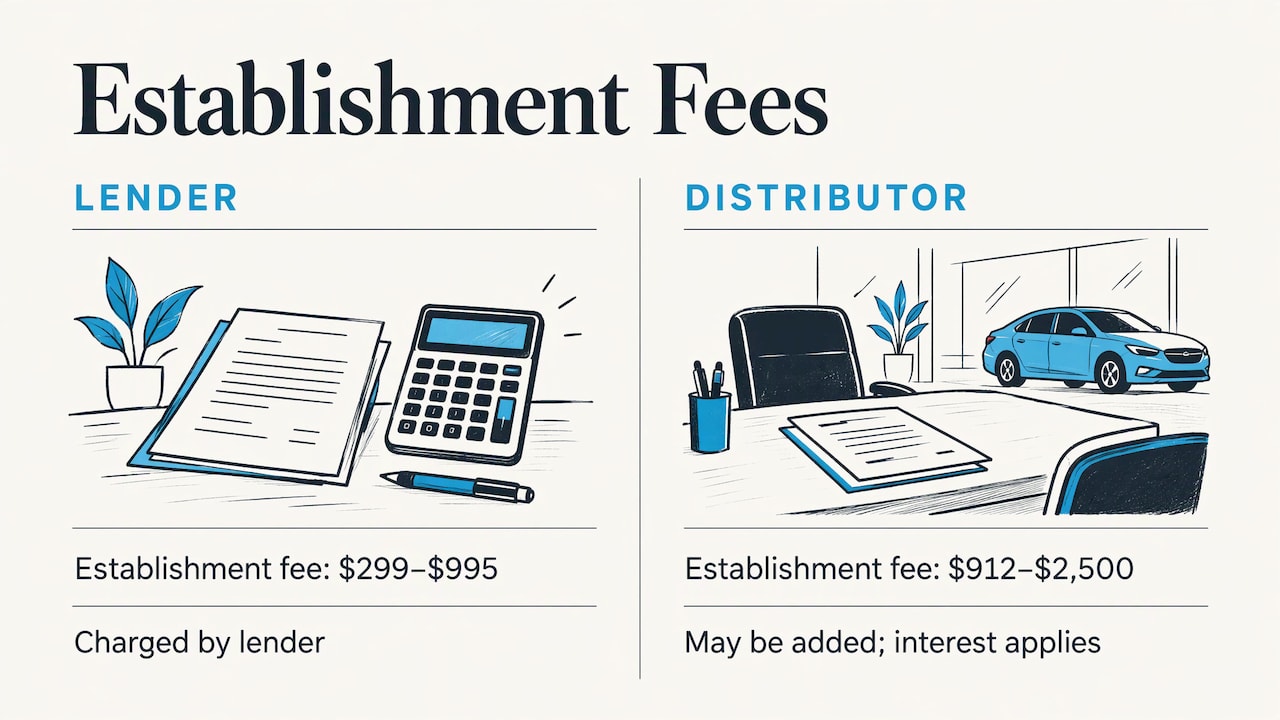
The same report notes that car loan providers across Australia often rely on third parties such as brokers and car dealerships to bring them customers, and that this can lead to significant differences in the total cost of a loan. ASIC’s media release on the review is a good short read if you want the headline findings.
The practical lesson is to ask, before you sign: who is involved in arranging this loan, what do they each charge, and is any of it being added to the amount I borrow?
How we are paid
We are a broker, not a lender. There is no cost to check your options with us. We are paid by lenders, and a broker fee may be added to your loan. We explain any fee in writing before anything proceeds, so you can see it before you decide.
Fixed or variable repayments
Moneysmart explains that with a fixed rate, repayments do not change, while variable-rate repayments can move with interest rates. Variable loans often allow extra repayments or early repayment, though conditions differ between lenders. Which structure is on offer depends on the lender and the product.
How repayments and loan terms work
Two levers drive your regular repayment: the term and the amount owing at the end.
A longer term lowers each repayment but means you pay interest for longer. A shorter term raises each repayment but reduces the time interest builds. Neither is right or wrong in general. It depends on your budget and how long you plan to keep the car.
New cars lose value over time, so a long term on a new car can leave you owing more than the car is worth for a while. That is worth thinking through before choosing a term, particularly if you tend to change cars every few years.
Worked example without rates
Here is how the shape of a loan changes, using round numbers only to show the principle, not a quote:
- You borrow an amount over five years with equal monthly repayments. Each repayment covers some interest and some of the amount borrowed.
- You extend the same loan to seven years. Each repayment falls, but you make more of them, so the interest charged over the life of the loan is higher.
- You add a balloon payment. Repayments fall again during the term, but you carry a lump sum into the final month.
To see the effect with your own numbers, use our repayment calculator. It shows indicative repayments only, since the final rate comes from the lender.
Balloon payments
A balloon payment lets you pay part of the loan through regular repayments and the rest as a final lump sum. Moneysmart notes that monthly payments may be smaller, but the total cost is generally higher. If you choose a balloon, plan how you will pay the lump sum at the end: from savings, by refinancing or by selling the car. A broker can talk you through how this works with different lenders.
What lenders look at
Lenders assess whether a loan suits you and whether you can afford it. Under the National Consumer Credit Protection Act 2009 (Cth), lenders must not provide a credit contract if it is unsuitable. The Australian Financial Complaints Authority explains that this means it is likely you would face substantial hardship to comply, or the loan fails to meet your requirements and objectives.
In practice, that means lenders will usually ask about:
- Your income and how long you have been in your job or running your business
- Your regular expenses and existing debts
- Your credit history
- The car you want to buy and the amount you plan to borrow
Employed applicants typically provide recent payslips and bank statements. ABN holders may be asked for tax returns, business activity statements or other evidence of income. Requirements differ between lenders, which is one reason a broker who works with a panel can be useful.
ASIC has also raised concerns about speed. Its review found that some lenders have agreed to review quick-turnaround processes after ASIC identified them as contributing to inadequate checking of consumers’ financial situations. A loan that moves quickly should still involve proper checks of your circumstances.
How to compare new car finance offers
Moneysmart’s advice is to compare loan features, fees and interest rates across several loans, check comparison rates and ask who is involved and what additional fees apply before you sign. Here is a checklist you can take to any lender, dealer or broker.
- Total cost, not just the repayment. Ask for the total amount you will repay over the term.
- All fees. Ask for establishment, ongoing and early repayment fees, and whether any are added to the loan.
- Who gets paid. Ask whether a broker, dealer or other third party is paid and how.
- Fixed or variable. Ask which applies and what happens to repayments if rates move.
- Extra repayments. Ask whether you can pay more or pay out early and at what cost.
- Balloon. If there is one, ask how big it is and what your plan is for the end of the term.
- Add-ons. Ask what extras are bundled in and whether they are optional.
Watch for add-on insurance
Insurance products may be offered alongside a car loan. AFCA’s fact sheet says it may set aside a contract obtained by inappropriate or unfair means and may require a refund of premiums and of interest paid on financed premiums. You are not required to take add-ons to get a loan, and you can compare cover separately before you decide. If any add-on is financed, remember that you pay interest on it for the whole term.
Steps to apply for new car finance
- Set your budget. Work out what you can comfortably repay each month alongside your other commitments. Only you can decide that, and a broker can help you think it through.
- Choose the type of finance. Consider a car loan, lease or asset finance based on how you earn income and how you will use the car.
- Gather your documents. Have payslips, bank statements and ID ready. ABN holders should also have tax returns or business activity statements to hand.
- Compare options. Look at several lenders, not only the one offered at the dealership.
- Read the contract. Check the term, fees, repayment amount, balloon and any add-ons.
- Settle and collect the car. Once the finance is in place, the lender pays the seller and you take delivery.
Why it pays to understand the downside protections
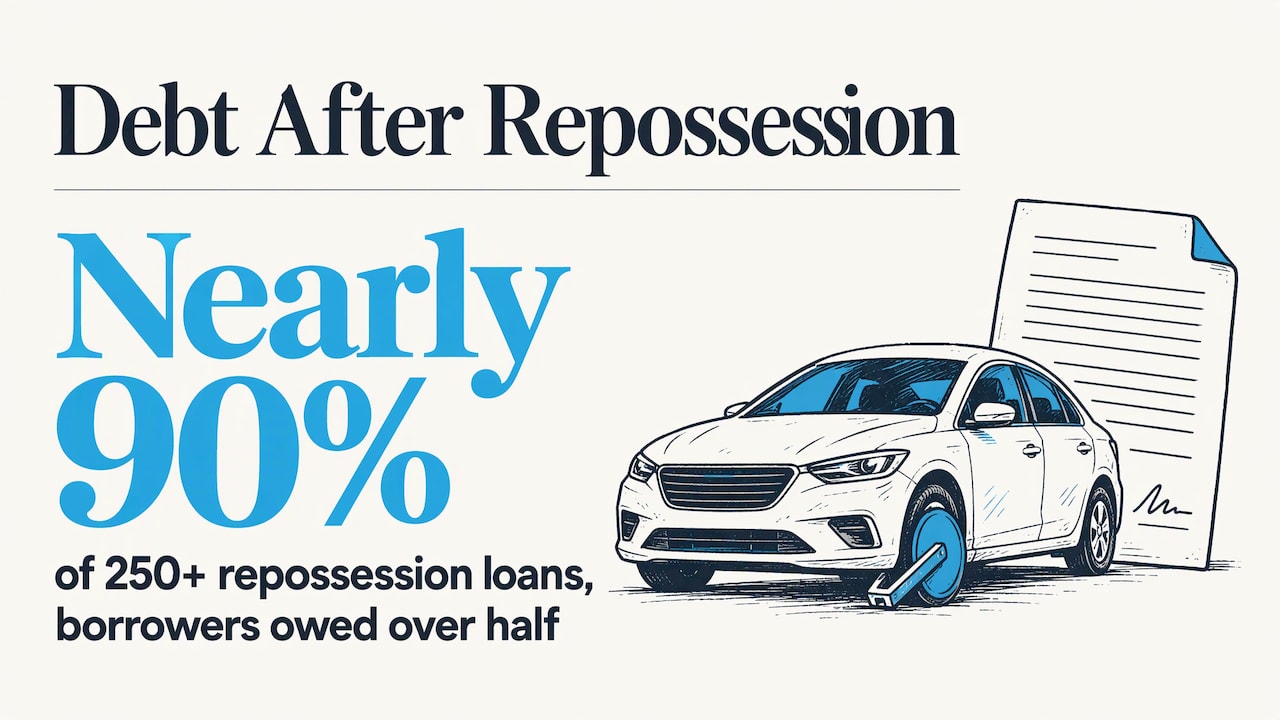
A car loan is secured, so it pays to know what could happen if life changes. ASIC found that in nearly 90% of the more than 250 loans it reviewed where cars were repossessed, consumers still owed over half the original loan amount. An ASIC representative stated that consumers should not be left with most of their debt after a vehicle is repossessed and sold.
If you expect trouble keeping up repayments, contact your lender early and ask about hardship options. AFCA can consider complaints about varying a credit contract when a borrower is in financial hardship. For free, independent guidance, Moneysmart and the National Debt Helpline are good places to start.
Our perspective
We built AFH Finance around a simple idea: a real broker, not a call centre, should compare the options for you.
New car finance is often arranged in a hurry, at a dealership, with one offer on the table. We think you deserve more than that. Our panel of 40+ lenders means we can look at a range of lenders that may suit your situation, whether you are employed or hold an ABN, and whether you are buying new, demo or private sale.
We also think fees should be plain. A broker fee may be added to your loan, and we explain it in writing before anything proceeds. We are paid by lenders, and there is no cost to check your options. Checking your options with us is a soft enquiry with no credit score impact.
Rates are set by the lender based on your situation, and we never tell you how much to borrow. What we do is talk through the options with you so the decision is yours and you understand it.
AFH Finance
Talk to a broker about your new car
If you are comparing new car finance, we can help you see the options that may suit you. You answer a short set of questions online, see indicative repayments, then a broker talks you through the options. We are a broker, not a lender, and we serve customers Australia wide. Our Google rating is 5.0 from 57 reviews.
Start on our car loans page or visit AFH Finance to check your options. Checking your options is a soft enquiry, and there is no cost to check your options. If you already have a happy broker experience, you can also refer a mate and get $200.
FAQ
Can I finance a new car if I am self-employed?
Yes, many lenders finance new cars for ABN holders, though the documents they ask for can differ from those for employees. You may be asked for tax returns or business activity statements. A broker can talk you through which lenders and documents may suit your situation.
Is a new car loan different from a personal loan?
Often, yes. A car loan is typically secured against the vehicle, so the lender can take and sell the car if repayments are missed. Personal loans can be used for many purposes, and terms depend on the lender. Our personal loans page explains how those work.
Will checking my options affect my credit score?
Checking your options with AFH Finance is a soft enquiry with no credit score impact. A full application with a lender is a separate step, and your broker will explain it before anything proceeds.
What does it cost to use a broker?
There is no cost to check your options from AFH Finance. We are paid by lenders, and a broker fee may be added to the loan. We explain any fee in writing before you go ahead. If you are ever unhappy, our complaints page sets out how to raise it.
How much should I borrow for a new car?
We can’t tell you that, because it depends on your income, expenses and goals. Use the repayment calculator to see indicative repayments, then talk to a broker about your situation.
Sources
- Car loans, Moneysmart
- Personal loans, Moneysmart
- Report REP 832 Lifting the bonnet, ASIC
- ASIC media release 26-132MR
- Approach to Responsible Lending, AFCA
- Fact sheet: Add-on Insurance, AFCA
- Australian Taxation Office
Recommended
- Car Loans Australia | Car Loan & Finance Broker
- Car Loan & Personal Loan Repayment Calculator
- Personal Loans Australia | Personal Loan Broker
See your options from our panel of 40+ lenders
Soft enquiry, no credit score impact. No cost to check your options.
Compare my optionsGeneral information only. This article doesn't consider your objectives, financial situation or needs, and isn't a credit offer. Lending criteria, fees and charges apply. We're paid by lenders, and a broker fee may be added to your loan. AFH Finance Pty Ltd, Credit Representative 548852 of Access Lending Group Pty Ltd, ACL 531308.