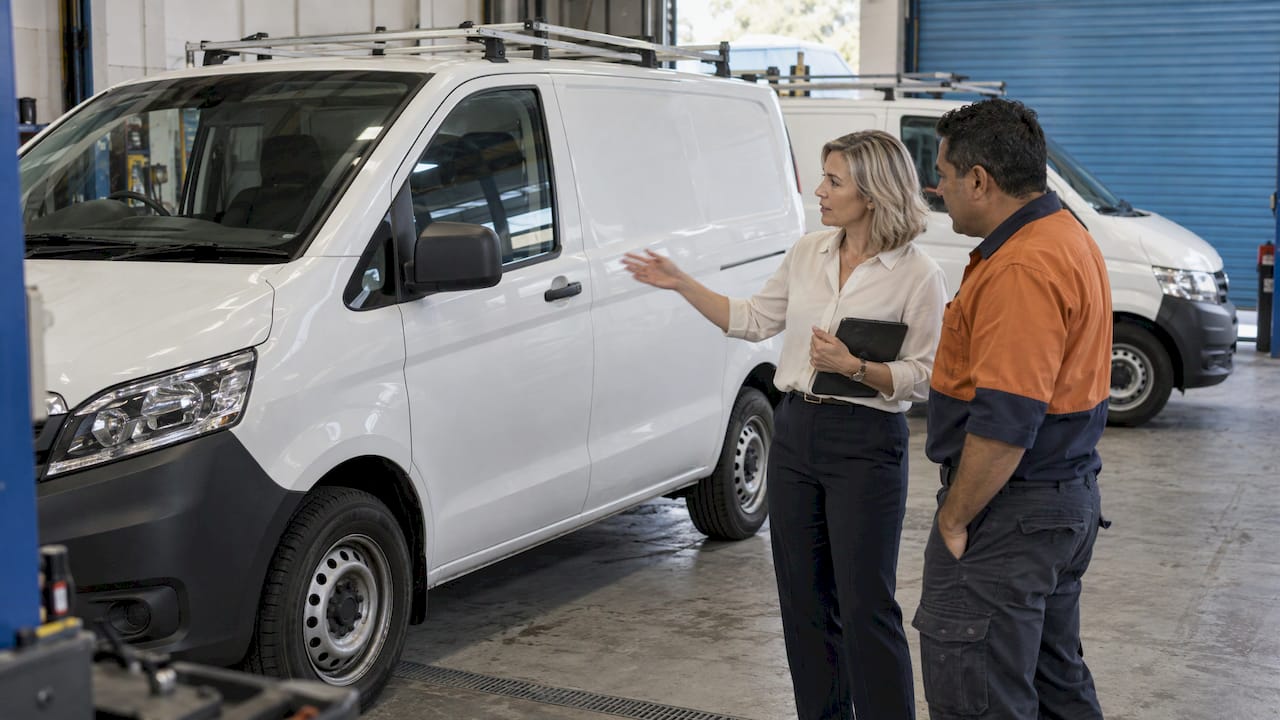
An equipment finance broker helps your business compare finance for machinery, vehicles and other equipment across a panel of lenders, then handles much of the paperwork. The broker does not lend the money. The lender does. At AFH Finance we are a broker, not a lender, and we work Australia wide with employed Australians and ABN holders. This guide explains what a broker does, how the process runs, which documents lenders ask for and what you take on once the finance is in place.
See your options from our panel of 40+ lenders
Soft enquiry, no credit score impact. No cost to check your options.
Compare my optionsThis is general information only, not personal advice. A broker can talk through your own situation.
AFH Finance
afhfinance.com.au
Compare Finance for Your Business Equipment
AFH Finance helps ABN holders compare business finance options across a panel of 40+ lenders, with indicative repayments shown online.
TL;DR
- An equipment finance broker compares loans from multiple lenders for you and handles most of the paperwork. Government guidance says brokers do not provide the funding themselves.
- Common structures are a chattel mortgage (equipment loan), commercial hire purchase, a finance lease and an operating lease. Each handles ownership differently.
- Lenders usually ask for ABN and GST details, a description of the equipment and why you need it, plus financial records that depend on the deal.
- Rates and terms are set by the lender based on your situation. Ask any broker, including us, how they are paid.
- At AFH, there is no cost to check your options. We are paid by lenders, and a broker fee may be added to the loan, always explained in writing before anything proceeds.
Table of Contents
- What an equipment finance broker does
- How a broker arranges equipment finance
- Types of equipment finance explained
- Documents lenders ask for
- What equipment finance costs
- Your obligations once you have the finance
- How to choose an equipment finance broker
- Talk to a broker about your equipment purchase
- FAQ
- Sources
What an equipment finance broker does
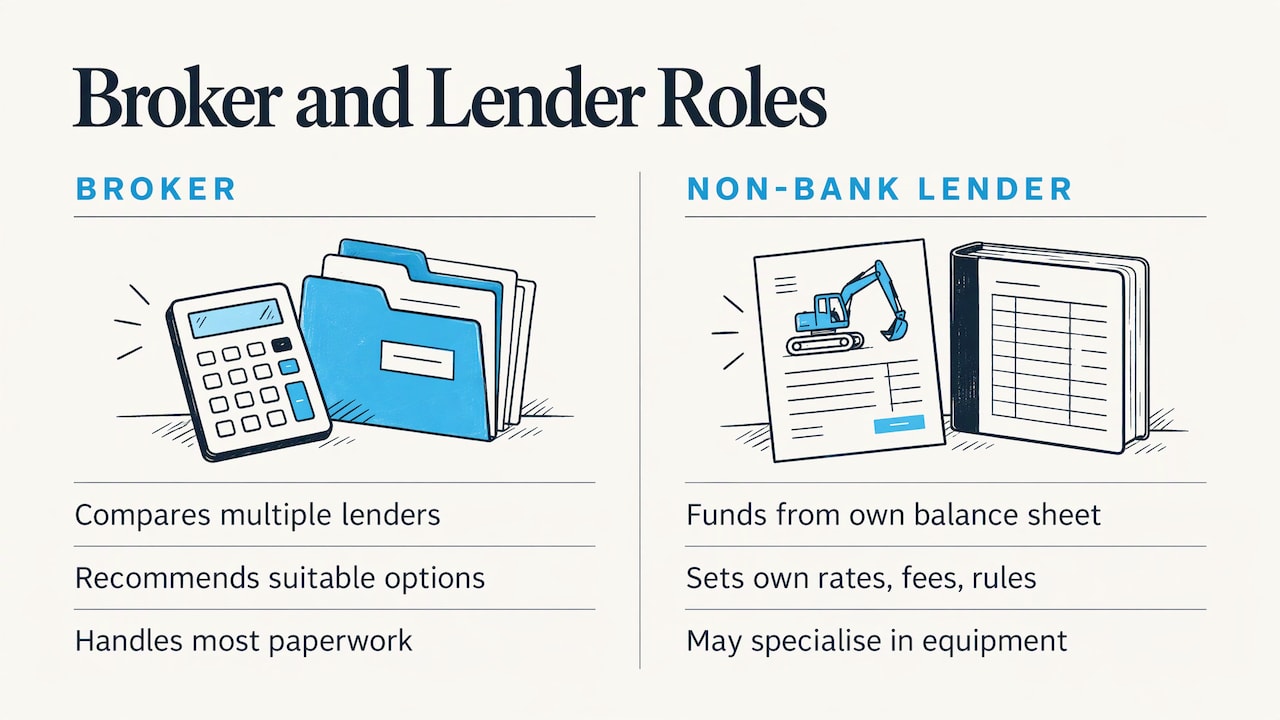
Think of a broker as the person who does the comparing and the legwork between you and the lenders. According to business.gov.au, business loan brokers assess your funding needs, compare loans from multiple lenders, recommend an option and handle most of the paperwork. The same page notes that some brokers charge borrowers directly, while others are paid commission by the lender. That is a fair question to put to anyone you speak with.
So how does a broker differ from an equipment finance company? A finance company, bank or non bank lender funds the loan from its own balance sheet and sets its own rates, fees and credit rules. A broker works across many of them. The Reserve Bank has observed that non bank lenders often specialise in automotive or equipment finance, and that brokers originate a larger share of asset finance loans than of other business loans. The same bulletin says greater broker activity can support competition between lenders and help small and medium businesses find lenders offering suitable terms.
In practice that matters because equipment finance is a specialist corner of lending. One lender may be comfortable with a second hand excavator, another with a fleet of vans, another with a sole trader’s first work ute. A broker who deals with these lenders every week knows which of them may suit a particular purchase.
How we work at AFH Finance
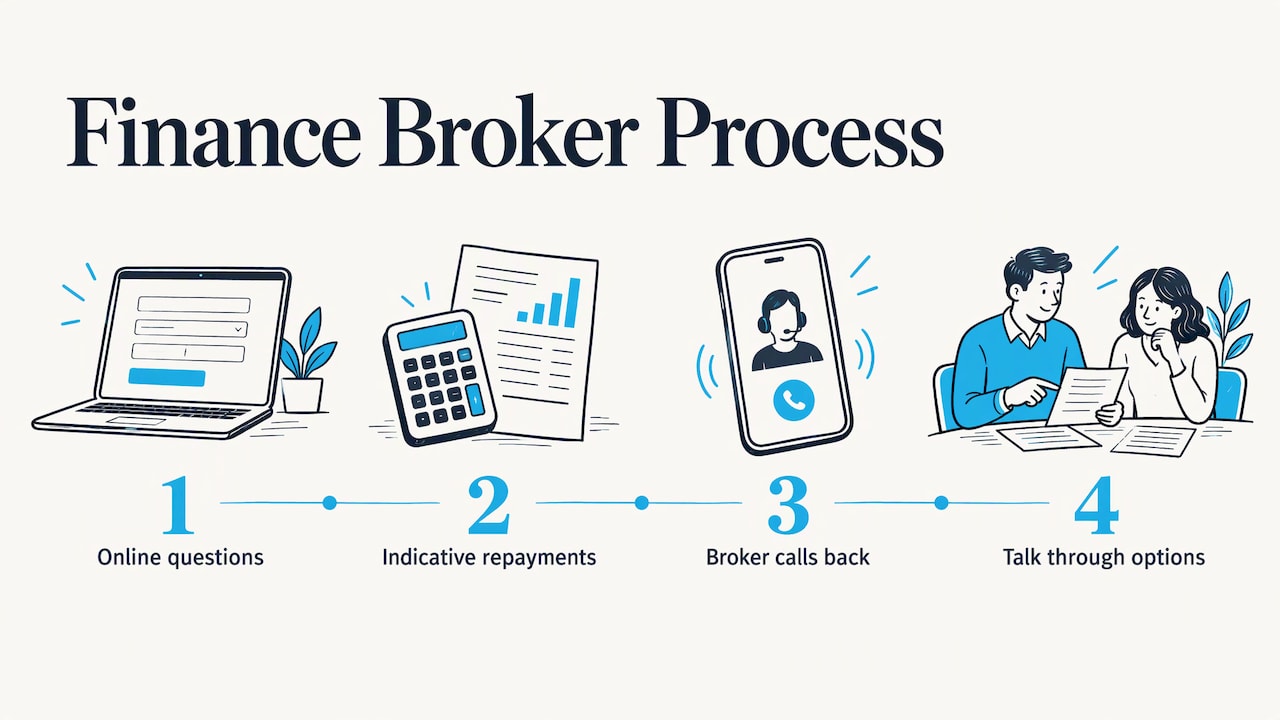
We are an Australia wide finance broker with a panel of 40+ lenders. You start online with a short set of questions and see indicative repayments. A real broker, not a call centre, then calls you back to talk through the options that may suit your situation. Checking your options is a soft enquiry, no credit score impact. There is no cost to check your options. We are paid by lenders, and a broker fee may be added to your loan. We explain any fee in writing before you go ahead.
Our business loans and equipment finance page covers vehicles, trucks and equipment for ABN holders.
How a broker arranges equipment finance
The steps below are a typical outline. The exact path depends on the lender, the size of the deal and the type of equipment.
- Define the purchase. You describe the equipment, whether it is new, demo or used, and who is selling it: a dealer, a supplier or a private seller.
- Explain how the business works. Your ABN, how long you have traded, whether you are registered for GST, and how you earn your income all shape which lenders may suit you.
- The broker compares lenders. Evidence the Australian Securities and Investments Commission has published from a commercial asset finance broker association says that commercial brokers engage bank and non bank lenders to source a suitable finance structure, risk profile and terms, and carry out due diligence when they set up their lender panels.
- You choose a structure and a lender. The broker explains the options and their trade offs, and you decide.
- Paperwork goes to the lender. The broker helps collect and submit the documents and keeps in contact with the lender.
- Settlement. Once the lender has the signed documents and the final invoice, it pays the supplier. One major bank’s business vehicle and equipment loan page describes this flow.
We do not tell readers how long any of these steps will take, because that depends on the lender and on how quickly documents come together. Your broker can explain what to expect for your deal.
Types of equipment finance explained
The Productivity Commission’s research on small business access to finance sets out the common asset finance structures. They are summarised here.
| Structure | Who owns the asset | How it generally works |
|---|---|---|
| Chattel mortgage (equipment loan) | The business | The asset secures the loan. You own the equipment from the start. |
| Commercial hire purchase | The lender until the last payment | Ownership transfers to you after the final payment. |
| Finance lease | Generally the lender | You may be able to buy the asset at a residual value at the end. |
| Operating lease | The lender | The asset is generally returned at the end of the term. |
There are also asset backed loans, where existing machinery or vehicles you already own are used as collateral.
Chattel mortgages in more detail
The chattel mortgage is the structure many sole traders and small businesses meet first. A major bank explains that a business equipment loan, also called a chattel mortgage, uses the vehicle or equipment as security. It can fund items such as cars, trucks, agricultural, construction, computer, fit out and manufacturing equipment, according to the same bank page.
A non bank lender’s guide to chattel mortgages adds some useful points:
- The lender registers its security interest on the Personal Property Securities Register (PPSR).
- The loan is primarily for business use.
- It may finance up to the full purchase price.
- It can include a balloon payment, which lowers regular repayments but may increase the total interest paid.
The guide also says tax treatment depends on business use and circumstances, so it is worth asking your accountant how a chosen structure sits with your tax position.
For a longer walk through, see our guides on the equipment business loan, business asset finance and machinery finance.
Documents lenders ask for
Having paperwork ready makes the conversation with your broker far easier. One major bank publishes a minimum documentation checklist for equipment finance that gives a good picture of the typical ask. It calls for:
- client information and business or director background
- a description of the goods and the reason for the purchase
- ABN and GST details
- privacy consent
Depending on the pathway and the size of the deal, that checklist may also require BAS or ATO statements, financial statements or tax returns, asset and liability statements, schedules of existing finance commitments, interim accounts, aged debtor and creditor listings and cash flow projections.
Two more points are worth knowing:
- For asset backed borrowing, the Productivity Commission says it commonly involves an asset valuation and extra documents such as proof of equipment maintenance.
- One major bank lists a valid Australian ABN, GST registration and predominantly business use as eligibility conditions for its business vehicle and equipment loan.
When you build cash flow projections, it helps to know your running costs. Hospitality operators, for example, can look at cleaning and hygiene prices for supplies when estimating what a kitchen costs to run each month.
Every lender sets its own list, so treat these as examples. Your broker can tell you what the lenders that may suit you want to see for your deal.
What equipment finance costs
Costs vary by lender, structure, the type and age of the asset, and your business profile. Rates are set by the lender based on the borrower’s situation, so we do not publish rates. What you can do is understand the pieces that make up the total cost:
- Interest. Set by the lender. A balloon payment can lower regular repayments but may increase total interest.
- Establishment and account fees. Lender fees differ, so ask for them in writing.
- Early repayment costs. Check what applies if you pay the loan out early.
- Broker fee. At AFH, a broker fee may be added to the loan, and we explain it in writing before anything proceeds. We are also paid by lenders.
On that last point, business.gov.au advises checking how a broker is paid and reading reviews, because some brokers charge borrowers while others receive lender commission. We think that is sensible advice, and we put our own arrangements in plain terms for exactly that reason.
To see how repayments change with different loan amounts and terms, try our repayment calculator. It gives indicative figures only.
Your obligations once you have the finance
The loan is only the start. Equipment finance agreements come with ongoing duties, and knowing them upfront helps you use the finance well.
Keep the asset covered and cared for
One major bank’s asset finance terms require borrowers to insure the goods for full replacement value, note the lender’s interest on the policy, look after and service the goods, and comply with environmental laws. Other lenders have their own terms, but this gives a clear idea of the pattern.
Do not sell or lease out the asset without consent
The same terms prohibit disposing of or leasing the financed goods without the lender’s consent. They list non payment, misleading information, failing to provide financial information, failing to keep insurance, insolvency and unauthorised ownership changes as potential defaults. Keep your lender informed if your business circumstances change.
Know what default can cost
Another lender’s equipment finance terms state that after default the borrower may owe the costs of repossession, storage, insurance, repair, registration and sale of the goods, plus amounts accelerated under the agreement. Reading the contract carefully and asking your broker to explain anything unclear is the safest way to avoid surprises.
Regulation and broker conduct
A non bank lender’s chattel mortgage guide notes that these loans are not regulated under the NCCP Act, as they are for business purposes. That makes it more important to deal with a broker who is open about fees. A broker code from one finance company requires accurate and complete application information, informed applicant consent, confidentiality, prompt complaint handling and disclosure of fees and how interest is calculated, as set out in its broker code of conduct.
AFH Finance Pty Ltd is Credit Representative 548852 of Access Lending Group Pty Ltd, ACL 531308.
How to choose an equipment finance broker
Whoever you talk to, a few questions help you judge the conversation:
- How are you paid? Ask whether they are paid by lenders, by you or both, and whether any fee is added to the loan.
- Will I get the fees in writing? You should see them before you proceed.
- How many lenders do you work with? A wider panel gives more structures and lenders to consider. Ours is 40+.
- Do you handle my kind of purchase? Dealer sales, private sale and used equipment can each work differently.
- Will a real person talk me through it? Equipment finance involves choices about ownership, balloon payments and security, so a conversation helps.
- What do the reviews say? Government guidance suggests checking them. We are rated 5.0 on Google from 63 reviews, with 750+ borrowers helped.
None of this tells you how much to borrow. That is a decision for you, your accountant and your own numbers.
Our perspective
Most business owners we speak to are not short of ideas about what equipment would help them grow. They are short of time and clarity. They want to know which structure suits the way their business earns, what the lenders will want to see and what the arrangement will ask of them afterwards.
That is why we built AFH Finance around a real broker, not a call centre. Your broker compares our panel of 40+ lenders, explains the options that may suit you in plain language and puts fees in writing before you go ahead. The first step is a soft enquiry, no credit score impact, and there is no cost to check your options.
We work Australia wide for employed Australians and ABN holders, from a sole trader buying a work ute to a business adding a truck or machinery. Because rates are set by each lender based on your situation, a conversation with a broker who knows the panel is the quickest way to understand where you stand.
AFH Finance
Talk to a broker about your equipment purchase
If you are weighing up a vehicle, truck or piece of equipment for your business, our business loans and equipment finance page is the place to start. Answer a short set of questions online, see indicative repayments, and a real broker will call you back to talk through lenders that may suit your situation. There is no cost to check your options. We are paid by lenders, and a broker fee may be added to the loan, always explained in writing before anything proceeds.
Soft enquiry, no credit score impact. Buying a vehicle for work as well? Our car loans page covers new, used and private sale cars, utes and SUVs.
FAQ
What does an equipment finance broker do?
A broker assesses what your business needs, compares loans from multiple lenders, explains the options and handles most of the paperwork, according to business.gov.au. The broker does not provide the funding. A lender does.
Is an equipment loan broker different from an equipment finance company?
Yes. A finance company or lender funds the loan and sets its own rates and rules. A broker works across many lenders and helps you compare. At AFH Finance we are a broker, not a lender, and rates are set by the lender based on your situation.
What documents do I need for equipment finance?
Expect to provide ABN and GST details, a description of the equipment and why you need it, and business background. Depending on the lender and deal size, you may also need BAS or ATO statements, tax returns, financial statements and cash flow projections. Your broker can tell you what the relevant lenders ask for.
Does checking my options affect my credit score?
At AFH Finance, checking options is a soft enquiry, no credit score impact. There is no cost to check your options. We are paid by lenders, and a broker fee may be added to the loan, explained in writing before anything proceeds.
Can sole traders and ABN holders get equipment finance?
Many lenders offer equipment finance to ABN holders. Conditions differ by lender, and one major bank lists a valid ABN, GST registration and predominantly business use as its eligibility conditions. A broker can talk you through lenders that may suit your situation.
Sources
- Choose your funding, business.gov.au
- Small Business Economic and Financial Conditions, RBA Bulletin, October 2025
- Commercial asset finance brokers association submission to ASIC, June 2025
- Small business access to finance, Productivity Commission, September 2021
- Business vehicle and equipment loan page, major bank
- Understanding chattel mortgages, non bank lender guide
- Equipment finance minimum documentation checklist, major bank
- Key terms of asset finance arrangements, major bank, February 2025
- Equipment finance general terms, October 2023
- Broker code of conduct, finance company, May 2025
- Cleaning and hygiene prices in Australia
Recommended
- Equipment Business Loan: How It Works in Australia
- Business Asset Finance in Australia: How It Works
- Business Loans & Equipment Finance Australia
- Machinery Finance in Australia: Options, Costs and How to Compare
See your options from our panel of 40+ lenders
Soft enquiry, no credit score impact. No cost to check your options.
Compare my optionsGeneral information only. This article doesn't consider your objectives, financial situation or needs, and isn't a credit offer. Lending criteria, fees and charges apply. We're paid by lenders, and a broker fee may be added to your loan. AFH Finance Pty Ltd, Credit Representative 548852 of Access Lending Group Pty Ltd, ACL 531308.