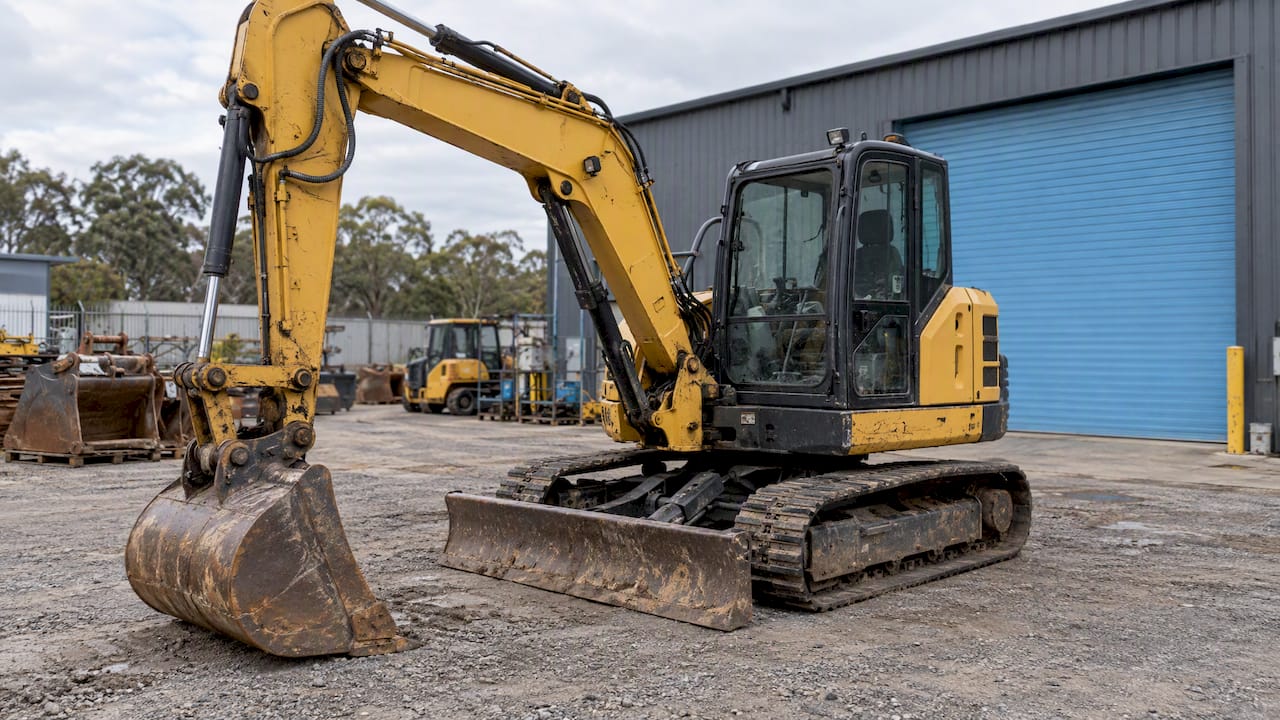
An equipment business loan lets your business buy a vehicle, machine or set of tools now and pay for it over a set term, with the asset itself usually acting as the security. In Australia it can be set up as a loan, a chattel mortgage, hire purchase or a lease, and the right structure depends on how you use the asset and how your business is taxed. This guide covers what you can finance, what lenders look at, the documents to gather, the fees to scrutinise and the tax points to raise with your accountant.
See your options from our panel of 40+ lenders
Soft enquiry, no credit score impact. No cost to check your options.
Compare my optionsIt is general information only, not personal advice. Rates and terms are set by the lender based on your situation, so we don’t quote them here.
AFH Finance
afhfinance.com.au
Finance Equipment For Your Business
AFH Finance helps ABN holders compare business finance options for vehicles, trucks and equipment with support from a broker.
TL;DR
- Equipment finance funds assets such as vehicles, machinery, tools, IT hardware and fit-outs, and the asset is commonly the security for the loan.
- Lenders typically look at your ABN status, trading history, revenue, cash flow, existing debts and the asset itself.
- Loan, hire purchase, chattel mortgage and lease are different structures with different ownership and tax outcomes, so compare them before you sign.
- Commercial loans carry less legal protection than consumer loans, so read the fees, repayment mechanics and default terms closely.
- Checking your options with AFH is a soft enquiry with no credit score impact, and there is no cost to check your options.
Table of Contents
- What an equipment business loan actually is
- Loan, chattel mortgage, hire purchase or lease
- Secured versus unsecured: where equipment finance sits
- What lenders look at
- Documents to have ready
- The costs to look at closely
- Tax points to raise with your accountant
- How to apply, step by step
- How AFH Finance fits in
- Our perspective
- FAQ
- Sources
What an equipment business loan actually is
An equipment business loan is a form of asset finance. Instead of paying the full price of a tool, truck or machine upfront, you borrow to buy it and repay over time. That keeps cash in the business for wages, stock and the unexpected.
The ATO’s own list of depreciating assets gives a sense of the range: computers, laptops, tablets, motor vehicles, office equipment, office furniture, tools and equipment. The same ATO page notes that transport and installation costs needed to get an asset ready for use can form part of its cost, which matters when you work out what you are actually financing.
In practice, common eligible assets include:
- Vehicles, including work utes, vans and trucks
- Heavy machinery and agricultural equipment
- Manufacturing plant
- IT hardware
- Medical and dental equipment
- Business fit-outs
For a tradie buying a ute, a café owner replacing a coffee machine or a clinic fitting out a new room, the idea is the same: the asset earns money while you pay it off.
Loan, chattel mortgage, hire purchase or lease
The word “loan” covers several structures. business.gov.au says that if you are funding vehicles, equipment or tools, you can consider a loan, hire purchase, or a chattel mortgage, and that leasing may also be appropriate. Here is how they generally differ.
| Structure | How it works | Who owns the asset |
|---|---|---|
| Equipment loan | You borrow to buy the asset and repay over a term | You, from purchase |
| Chattel mortgage | The business borrows to buy and owns the item, with the lender holding a security interest over it | You, from purchase |
| Hire purchase | You pay the item off in instalments | Typically the lender until the final payment is made |
| Lease | You pay to use the asset for a period | The lessor |
The same business.gov.au page makes a practical point: the funding structure should follow the purchase. If you are buying equipment, compare buying and leasing. It also notes that some non-bank lenders specialise in equipment finance and may charge higher interest, which is one reason comparing several lenders is worth the effort.
Ask your accountant which structure suits your tax position before you commit. Ownership, GST treatment and how repayments are recorded can differ between them.
Secured versus unsecured: where equipment finance sits
business.gov.au explains that a secured business loan is backed by collateral such as property or inventory, while an unsecured loan does not put assets up as security and is assessed mainly on the financial health of the business and its ability to repay.
Equipment finance is usually built around the asset you are buying. That can make it a different proposition from a general unsecured business loan, because the lender is looking at the equipment as well as at your business. It also means the lender may have rights over the asset if repayments are not met, so you want to understand those terms before you proceed.
If you need money for wages, marketing or stock rather than a specific asset, an unsecured product may be a better conversation to have. A broker can walk you through both.
What lenders look at
Every lender sets its own criteria, but a few themes come up again and again.
The asset
Lenders generally prefer assets that are identifiable, insurable and have a clear resale market and continuing value. A late-model excavator with a serial number sits more comfortably in that picture than a highly customised piece of kit with a narrow market. Condition matters too, and so does whether a deposit is available.
The business
Lenders commonly assess active ABN status, trading history, revenue, cash flow, existing debt and personal and business credit history. If you are a sole trader, your personal finances and the business’s are often closely linked, so expect questions about both.
Newer businesses can still apply. Different lenders weigh trading history differently, which is one reason a broker who can look across a panel of lenders can be useful. We can’t say what any lender will decide, and we never promise an outcome.
Your repayment capacity
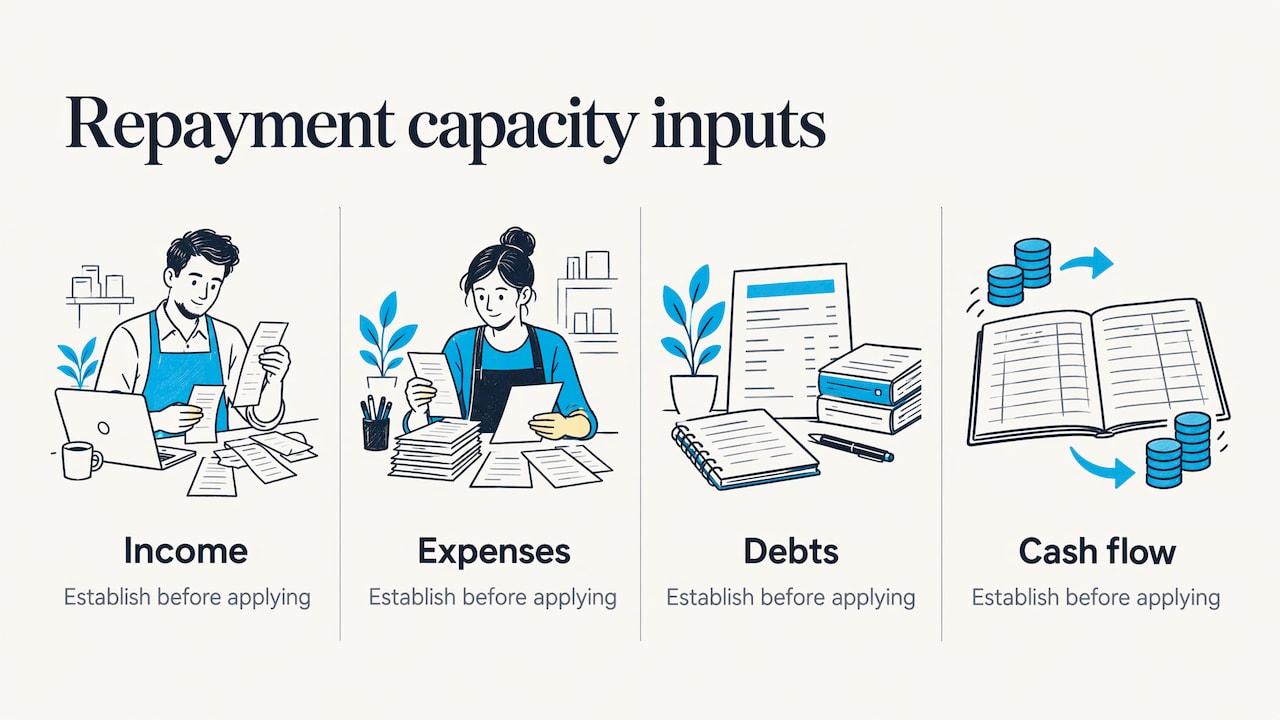
This is the part you control most. Before you apply, business.gov.au suggests you establish your income, expenses, debts and cash flow and calculate the maximum repayment you could afford. That figure is yours to work out, with your accountant or a broker, based on your own numbers. We don’t tell anyone how much to borrow.
Documents to have ready
Preparing paperwork before you start saves back-and-forth later. business.gov.au lists items such as identification, financial reports, forecasts, lease agreements and personal financial information, and a business plan where relevant.
A practical checklist for equipment finance, drawing on Xero’s July 2026 guide:
- ABN details
- Recent financial statements
- At least three months of bank statements
- A quote or invoice for the asset
- Identification for directors or owners
- For startups, a business plan, personal financial statements or evidence of industry experience
If you are buying from a private seller rather than a dealer, tell your broker early, because the paperwork and the way the purchase is settled can differ.
The costs to look at closely
There is no single price for equipment finance. The interest rate, fees and term are set by the lender based on your situation and the asset. What you can do is know which parts of the deal to read slowly.
ASIC is direct on this. It says commercial loans receive the lowest level of legal protection, and lists the kinds of issues that lead to disputes: fees (including broker application fees), repayment arrangements, valuations, consequences of default, rights under the agreement and inadequate disclosure.
Turn that into a checklist before you sign:
- Fees: What are the establishment, ongoing and early-exit fees? Is any broker fee shown in writing?
- Repayments: How often are they due, and is there a final lump sum (balloon) at the end?
- Valuation: How is the asset valued, and what happens if its value falls?
- Default: What are the lender’s rights if you miss a payment?
- Disclosure: Can you point to each of these in the documents?
About how we are paid: there is no cost to check your options from AFH. We are paid by lenders, and a broker fee may be added to your loan. If one applies, we explain it in writing before anything proceeds.
Tax points to raise with your accountant
The tax side is often a reason people choose equipment finance, and also where mistakes happen. This is general information, so confirm your own position with a registered tax professional.
The ATO generally treats business equipment as a depreciating capital asset. Deductions usually follow the decline in value, are reduced for input-tax credits and are limited to business use. Private use cannot be claimed, so if a ute is used 70% for work, the deduction reflects that share, as the ATO explains.
Two more points from the ATO:
- GST: A GST-registered business entitled to the full input-tax credit excludes GST from the asset’s tax cost. A business not registered for GST includes GST in the cost, and a partial-credit business reduces cost only by the creditable portion.
- Small business write-off rules: For the 2025 to 26 income year, an eligible small business with aggregated turnover below $10 million could immediately deduct the business-use portion of an eligible asset costing less than $20,000, if first used or installed ready for use between 1 July 2025 and 30 June 2026, per the ATO’s depreciating assets guide. That window has closed, and these thresholds change, so check the ATO’s current settings before you time a purchase.
How to apply, step by step
- Work out the need. Name the asset, the quote and how it will earn or save money for the business.
- Check your numbers. Review income, expenses, debts and cash flow, and decide what repayment is comfortable for your business.
- Pick a structure to explore. Loan, chattel mortgage, hire purchase or lease, with your accountant’s view on tax.
- Gather documents. Use the checklist above.
- Compare lenders. Terms, fees and conditions differ, so look at more than one.
- Read the contract. Focus on the fees, default and valuation clauses ASIC flags.
- Settle and insure. Lenders generally want the asset insured, so organise cover before you take delivery.
How AFH Finance fits in
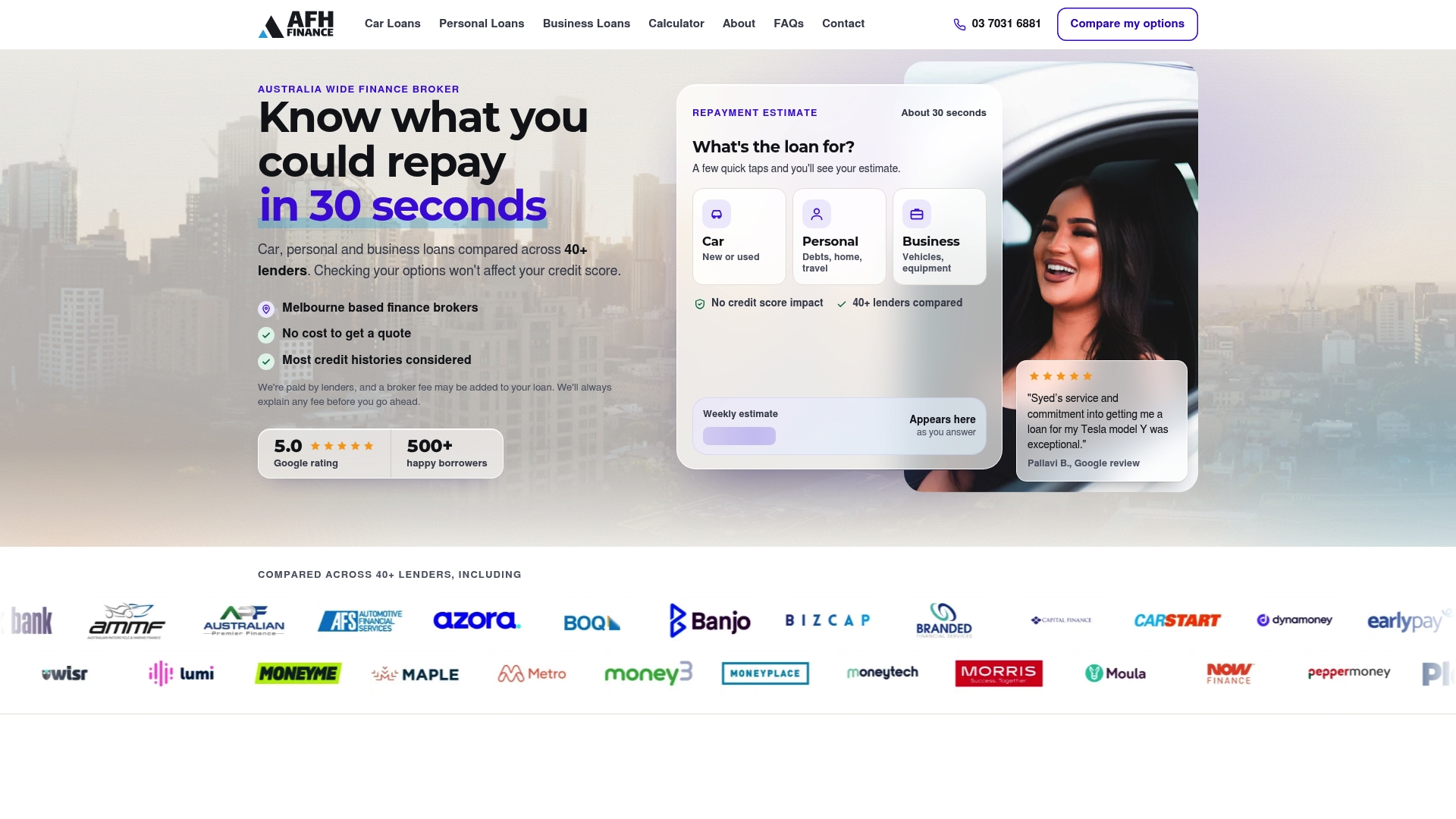
We are a finance broker, not a lender. Here is how it works: you answer a short set of questions online and see indicative repayments. A broker then talks you through lenders that may suit your situation from our panel of 40+ lenders. Checking your options with AFH is a soft enquiry with no credit score impact.
Our business loans and equipment finance service is for ABN holders buying vehicles, trucks and equipment. If you want to sense-check repayments first, our repayment calculator gives an indication, though the actual rate is set by the lender based on your situation.
If the asset is a work vehicle, our car loans page covers new, used and private sale options. Caravan or mobile-business setups can be explored on our caravan loans page. And if you know another business owner weighing up finance, our refer a mate program offers $200.
Our perspective
At AFH we see the same pattern with business owners: the equipment is the easy decision, and the finance structure is where the time goes. People often approach one lender, accept whatever structure is offered and only later find the fees or end-of-term conditions weren’t what they expected.
That is why we think a broker earns their place on equipment purchases. A real person, here in Melbourne, who can compare a panel of 40+ lenders and explain the structure in plain language gives you a fuller picture than a single application form can. We are paid by lenders, a broker fee may be added to the loan, and we put any fee in writing before you go ahead.
We also build our service for employed Australians and ABN holders, so sole traders and small businesses are exactly who we talk to every day. We can’t promise outcomes, and rates are set by the lender based on your situation. What we can do is help you see lenders that may suit you and understand what you are signing.
AFH Finance
FAQ
Can a sole trader get an equipment loan?
Yes, sole traders with an ABN can apply for equipment finance. Lenders commonly look at ABN status, trading history, cash flow and credit history, and for sole traders personal and business finances are often considered together. A broker can talk you through lenders that may suit your situation.
Do I need a deposit?
It depends on the lender, the asset and your business. Lenders commonly consider whether a deposit is available as one of several factors. Ask your broker what different lenders expect for your asset.
Is equipment finance the same as a business loan?
Not exactly. A general business loan may be secured or unsecured, while equipment finance is typically built around the asset being purchased. Loans, hire purchase, chattel mortgages and leases each treat ownership and costs differently, so compare them before choosing.
Does checking my options affect my credit score?
Checking your options with AFH is a soft enquiry with no credit score impact. There is no cost to check your options. A lender may run its own checks when a full application is made, and a broker can explain when that happens.
What should I read most carefully in the contract?
Start with fees, repayment mechanics, valuation, default consequences and disclosure. ASIC lists these as common sources of commercial loan disputes, and commercial loans carry less legal protection than consumer loans.
Sources
- Assets and exclusions, Australian Taxation Office
- Guide to depreciating assets, Australian Taxation Office
- Choose your funding, business.gov.au
- Apply for a business loan, business.gov.au
- Disputes about commercial loans, ASIC
- Asset finance guide, Xero Australia
Recommended
Made with BabyLoveGrowth’s technology
See your options from our panel of 40+ lenders
Soft enquiry, no credit score impact. No cost to check your options.
Compare my optionsGeneral information only. This article doesn't consider your objectives, financial situation or needs, and isn't a credit offer. Lending criteria, fees and charges apply. We're paid by lenders, and a broker fee may be added to your loan. AFH Finance Pty Ltd, Credit Representative 548852 of Access Lending Group Pty Ltd, ACL 531308.