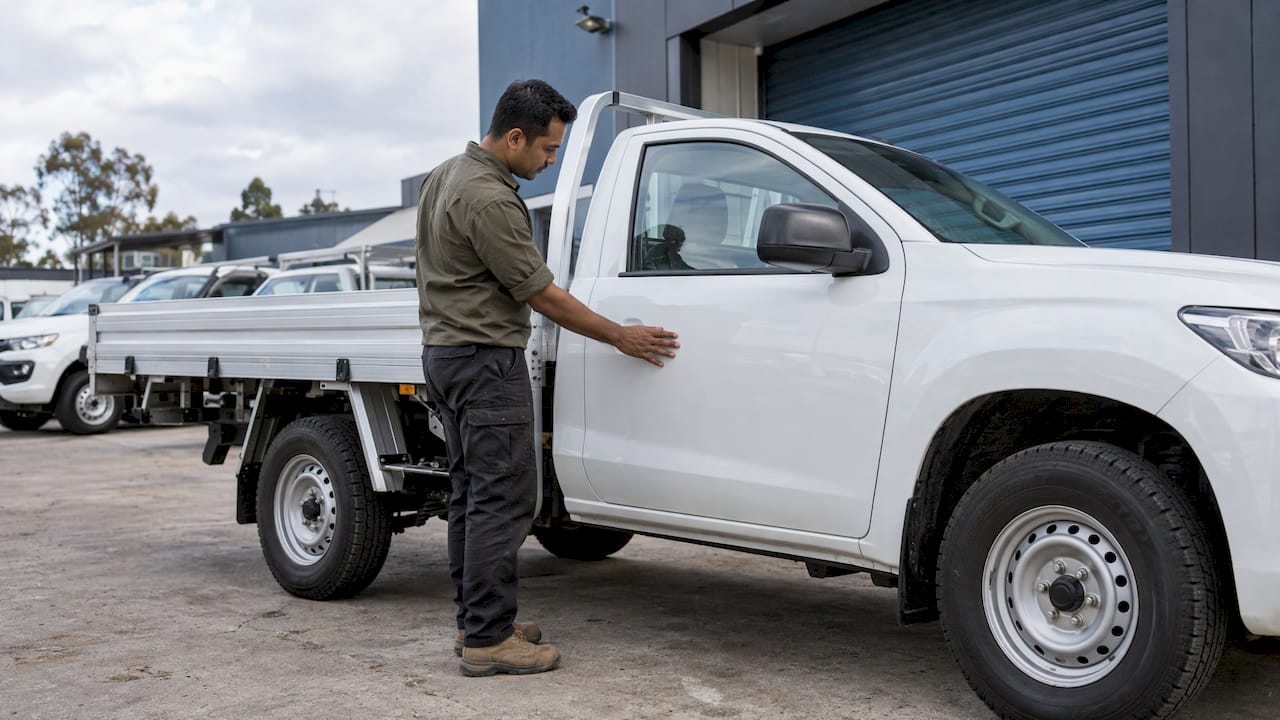
Business asset finance lets you buy a vehicle, machine or piece of equipment now and pay for it over time, with the asset itself usually acting as security for the loan. For ABN holders and companies, it keeps cash in the business while the asset starts earning. This guide covers what you can finance, how the main structures differ, what lenders typically ask for, and what to check before you sign.
See your options from our panel of 40+ lenders
Soft enquiry, no credit score impact. No cost to check your options.
Compare my optionsAFH Finance
afhfinance.com.au
Compare Finance for Business Assets
AFH Finance helps ABN holders compare vehicle, truck and equipment finance options from a panel of more than 40 lenders.
Compare business finance options
TL;DR
- Asset finance (sometimes called a business asset loan) is a secured loan or lease used to fund vehicles, machinery and equipment, with the asset as primary security.
- The common structures are chattel mortgage, hire purchase and finance lease. They differ on who owns the asset, how GST and tax are treated, and what happens at the end.
- Lenders generally look for an active ABN, some trading history, a quote for the asset and evidence you can meet repayments.
- Rates and terms are set by the lender based on your situation, so compare more than one lender and read the fees in writing.
- AFH Finance is a broker, not a lender. Checking your options with us is a soft enquiry with no credit score impact.
Table of Contents
- What business asset finance actually is
- The three main structures compared
- Buying outright versus financing
- What lenders usually ask for
- Tax, GST and accounting
- Costs and repayment factors to weigh up
- What to check before you sign
- How a broker helps
- Getting started with AFH Finance
- FAQ
- Sources
What business asset finance actually is
With asset finance, a lender funds the purchase of something your business needs to operate, and you repay it in instalments over an agreed term. Because the asset backs the loan, the lender has security over it. That is the main difference from an unsecured business loan, where there is no specific asset behind the debt.
The search terms “business asset finance” and “business asset loan” describe the same idea. In practice, the product you end up with is usually one of three structures, covered below.
What you can finance
Businesses commonly use asset finance for assets that are essential to operations, including vehicles, heavy machinery, IT equipment and fitouts. Typical examples include:
- Utes, vans, trucks and cars used for work
- Tradie equipment, excavators and other machinery
- Hospitality and café equipment
- Office technology and fitouts
- Trailers and other work-related vehicles
New and used assets can both be financed, and so can assets bought from a dealer or a private seller. Which assets a given lender will fund, and at what age, depends on that lender’s policy.
The three main structures compared
The structure you choose affects ownership, cash flow, GST and tax. The table below is general information only. Your accountant can tell you how each structure applies to your business.
| Feature | Chattel mortgage | Hire purchase | Finance lease |
|---|---|---|---|
| Who owns the asset during the term | Your business, from day one, with the loan secured over it | The financier until the final payment | The financier |
| Typical use | Vehicles and equipment you plan to keep | Equipment you plan to own at the end | Equipment you want to use without owning, or may upgrade |
| End of term | You already own the asset, usually with any balloon paid | Ownership transfers once payments are complete | Return, extend or buy, depending on the contract |
| Tax and GST treatment | Varies, get specific tax advice | Varies, get specific tax advice | Varies, get specific tax advice |
Under a chattel mortgage, a business owns the asset from day one, with the loan secured over it. That is why it is a popular choice for work vehicles and machinery you intend to keep.
Balloon payments and terms
Many asset finance contracts allow a balloon (residual) payment at the end of the term. A balloon lowers the regular repayment but leaves a lump sum due at the end, so the total you pay and the way you plan for that final payment both matter. Talk to a broker about how term length and a balloon would affect your situation rather than choosing a number in isolation.
Buying outright versus financing
Paying cash avoids interest and fees, but it ties up money you may need for wages, stock, tax and the unexpected. Financing spreads the cost over the period the asset is being used. The Australian Government’s business.gov.au site covers the decision in its guide to leasing or buying vehicles and equipment.
A few points from that framing are worth keeping in mind:
- Cash flow. Financing lets you match repayments to the income the asset helps generate.
- Maintenance. When you buy equipment, you are responsible for repairs and maintenance unless they are covered by warranty or insurance. Factor that into your running costs whichever way you fund it.
- Total cost. Financing generally costs more overall than paying cash, because interest and fees are added. The trade-off is flexibility.
What lenders usually ask for
Requirements vary by lender and by asset, but Australian businesses generally need an active ABN, a trading history (often two years) and evidence of financial capacity to support repayments. Some lenders consider newer businesses, so a shorter history is worth raising with a broker rather than assuming it rules you out.
Expect to provide:
- A quote or invoice for the asset. From the dealer, supplier or a private seller.
- Identification. For the directors, owners or sole trader.
- Financial information. This might include bank statements, tax returns or financial statements, depending on the loan size and your structure.
- Business details. ABN, entity type and how long you have traded.
Lenders also often require specific insurance cover on the asset as a condition of settlement. It pays to line up the policy early so it does not hold up delivery. If your asset is an electric delivery van, for example, the details of insuring an electric delivery van can differ from a standard petrol or diesel vehicle, which is worth knowing before you settle.
Tax, GST and accounting
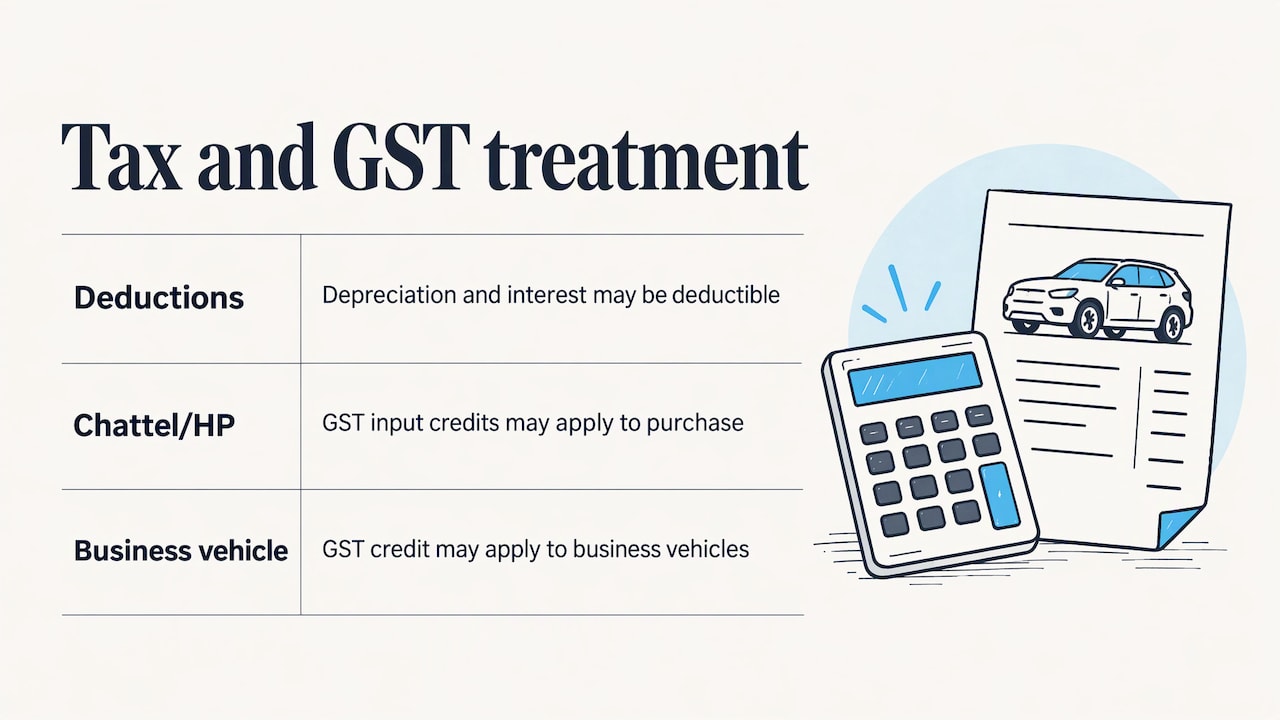
Tax treatment depends on the structure, your entity type and how the asset is used. As general information, businesses may be able to claim depreciation and interest as deductions, and GST input credits on the purchase under a chattel mortgage or hire purchase. If you are registered for GST, you might be able to claim a credit for GST paid when buying or leasing a vehicle for business purposes.
These rules can change and depend on your circumstances, including how much of the asset’s use is for business. Before you commit, speak with your accountant or a registered tax agent. The Australian Taxation Office is the authority for the current rules.
Costs and repayment factors to weigh up
The repayment figure is only one part of the cost. When comparing asset finance options, look at:
- The interest rate. Set by the lender based on your situation, including your business profile, the asset and the loan structure. We do not publish rates, because they are not ours to set.
- Establishment and account-keeping fees. Some contracts charge these up front or monthly.
- Early repayment terms. Ask what applies if you want to pay out the loan or sell the asset early.
- Balloon or residual amount. A lower repayment now can mean a larger final payment.
- Term length. A longer term reduces each repayment but usually increases the total you pay over the life of the loan.
- Broker fees. If you use a broker, find out how they are paid. With AFH, we are paid by lenders, and a broker fee may be added to the loan. We explain it in writing before anything proceeds.
Our repayment calculator gives you an indicative picture of how amount and term interact. It is an estimate only, and the final figures come from the lender.
What to check before you sign
An asset finance contract is a legal document with your business’s name on it. Take time with it, and ask your broker or accountant to explain any clause you are unsure about. A sensible checklist:
- Who owns the asset and when. Make sure the structure matches what you expected.
- Total amount payable. Not just the repayment, but the full cost over the term including fees.
- Fees and charges. Every one, in writing, including any added to the loan.
- End-of-term terms. Balloon amount, return conditions, and what happens if you want to keep or upgrade the asset.
- Default and early exit terms. What the lender can do if a payment is missed, and what it costs to pay out early.
- Insurance requirements. The type and level of cover required, and who must be noted as an interested party.
- Use restrictions. Whether the asset can be used for private purposes, and any limits on that.
- Security. Whether the lender wants anything beyond the asset itself, such as a personal guarantee from directors.
If anything is unclear, ask before signing rather than after. A broker should be able to walk you through the document line by line.
How a broker helps
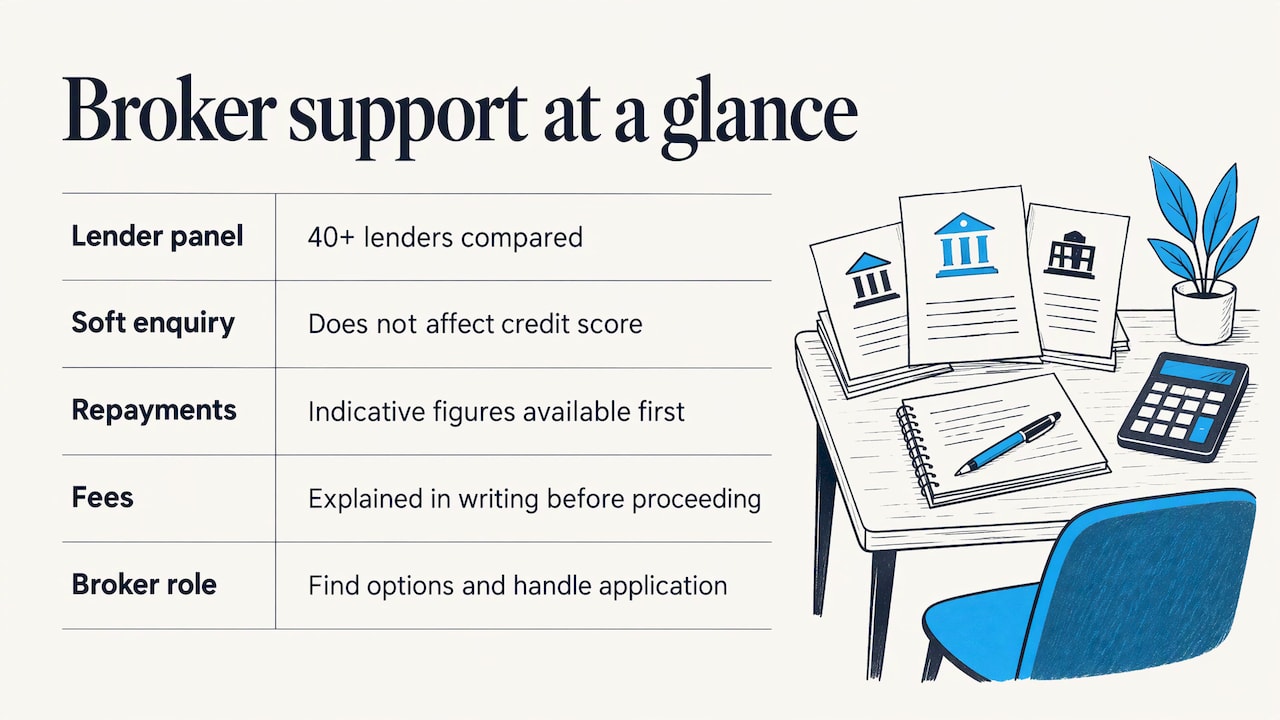
Every lender has its own appetite for certain assets, industries and business ages. A broker with a wide panel can show you which lenders may suit your situation without you applying to each one separately. Comparing through a broker also means one conversation instead of many.
Because checking your options with AFH is a soft enquiry, it has no credit score impact. You can see indicative repayments first, then talk the options through with a broker.
Our view: the asset should work harder than the paperwork
We talk to ABN holders and business owners who have spent weeks chasing quotes from one lender after another, only to find each has different rules about asset age, trading history and deposits. That time is better spent running the business.
This is why we built AFH Finance around a real broker rather than a call centre. We compare a panel of 40+ lenders for you, explain how the structure works in plain language, and put the fees in writing before you go ahead. Rates are set by the lender based on your situation, and we will tell you what we can and cannot tell you about that upfront.
We are a broker, not a lender. Our role is to help you find options that may suit you, then handle the application with you. We give general information only, so we always suggest talking through your own numbers with a broker and your accountant.
AFH Finance
Getting started with AFH Finance
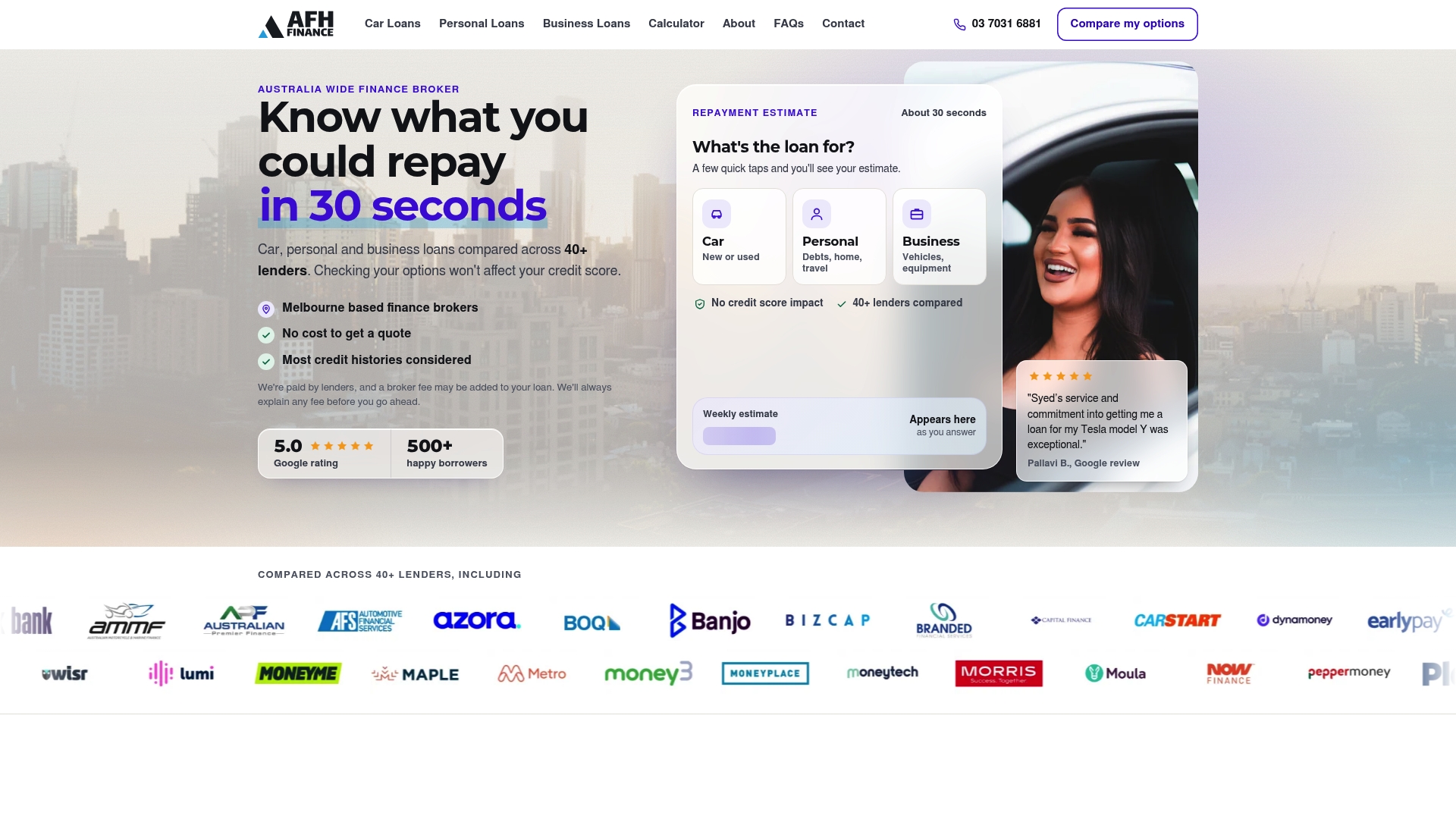
If you are an ABN holder or business owner planning to buy a vehicle, truck or equipment, our business loans and equipment finance page explains how it works. You answer a short set of questions online, see indicative repayments, then a broker talks you through the lenders that may suit you. There is no cost to check your options.
We are paid by lenders, and a broker fee may be added to the loan, always explained in writing before anything proceeds. AFH Finance Pty Ltd is Credit Representative 548852 of Access Lending Group Pty Ltd, ACL 531308.
Purchasing a vehicle for personal use instead? See our car loans, personal loans or caravan loans.
FAQ
Is a business asset loan the same as a chattel mortgage?
Not exactly. “Asset finance” is the broad category, and a chattel mortgage is one common structure within it. Others include hire purchase and finance leases. Under a chattel mortgage, your business owns the asset from day one and the lender holds security over it.
Can I get asset finance as a sole trader with an ABN?
Yes, sole traders and other ABN holders can apply. Lenders generally look for an active ABN, some trading history and evidence you can meet repayments. Each lender has its own policy, so a broker can point you to the lenders that may suit your situation.
Will checking my options affect my credit score?
Checking your options with AFH is a soft enquiry with no credit score impact. A full application to a lender is a separate step, and your broker will explain what it involves before you proceed.
Can I claim GST on a financed vehicle?
If you are registered for GST, you might be able to claim a credit for GST paid on a vehicle bought for business purposes. The details depend on your structure and how the vehicle is used, so confirm with your accountant.
Sources
- Asset finance: How Australian businesses can fund equipment (Xero)
- Leasing or buying vehicles and equipment (business.gov.au)
- Elektrische bestelauto verzekeren als koerier (Koeriersverzekeringen.nl)
Recommended
See your options from our panel of 40+ lenders
Soft enquiry, no credit score impact. No cost to check your options.
Compare my optionsGeneral information only. This article doesn't consider your objectives, financial situation or needs, and isn't a credit offer. Lending criteria, fees and charges apply. We're paid by lenders, and a broker fee may be added to your loan. AFH Finance Pty Ltd, Credit Representative 548852 of Access Lending Group Pty Ltd, ACL 531308.